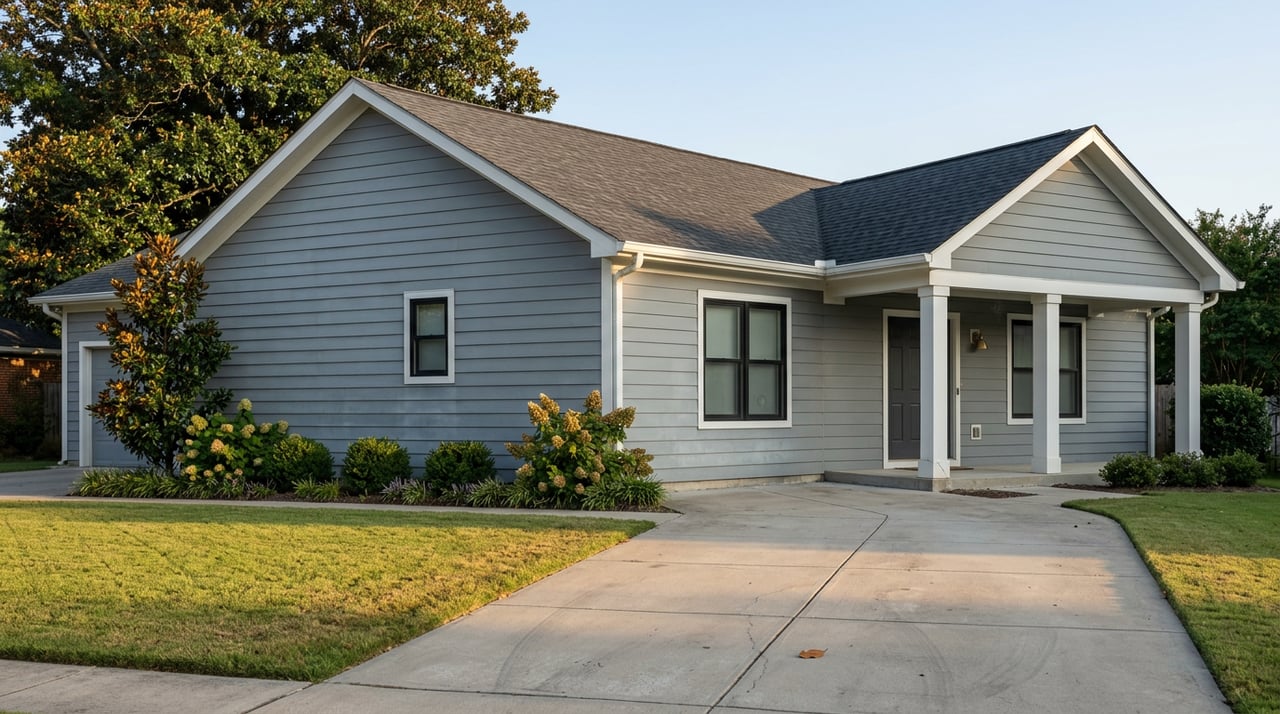
Cary NC Neighborhood Home Prices Across Four Markets
August 20, 2026
August 20, 2026
Wake County is about to send appraisers into Cary's neighborhoods again. The 2027 revaluation cycle is already moving, with field and office reviews starting this winter, and the last time this happened, in 2024, values rose an average of 51 percent countywide. That average told nobody anything useful. Some streets moved far more than that. Some moved far less. The same thing is about to happen again, and it will land unevenly for the same reason the citywide median home price does: Cary is not one market wearing a single number. It is at least four.
If you have been comparing homes in Preston against homes in Carpenter Village using the same "median price in Cary" headline, you have been comparing apples to a fruit basket. The number is real. It just isn't describing anything you can walk through.
Start with the number itself. Redfin's tracker, covering the three months ending June 2026, put Cary's median sale price at $645,000, down slightly from the same period a year earlier. Zillow's home value index, updated through the end of June 2026, put the typical Cary home at $600,054, down 1.4 percent over the past year. Two widely used trackers, watching the same town in the same window, landed roughly $45,000 apart, because one measures closed sales and the other estimates value across the entire housing stock, renovated and untouched alike.
Neither number describes Preston. Neither describes Carpenter Village. They are both averaging across communities that behave nothing like each other, for reasons that have nothing to do with a citywide trend and everything to do with what is actually sitting on the ground in each one.
| Neighborhood | Typical price range | Monthly HOA | Typical buyer tenure |
|---|---|---|---|
| Preston | $700,000 to $1.2M+ | $175 to $225 | 10+ years |
| Amberly | Mid-$400s to $1.1M | Varies by section | Varied stay lengths |
| MacGregor Downs | $450,000 to $800,000 (lakefront estates to $5.3M) | $100 to $160 | 5 to 7 years |
| Carpenter Village | Median list around $527,600 | Community-based | Varied stay lengths |
These aren't four flavors of the same product. Each row exists because of a different structural force, and understanding which force is doing the work matters more than the number itself.
Preston sits north of I-40 along Prestonwood Parkway, anchored by Prestonwood Country Club, and it has decades of tree canopy that a newer subdivision cannot manufacture. SAS, the Cary-based software company, began developing the land in the early 1990s, which means Preston has had thirty-plus years to mature while staying essentially built out. Realtor.com data cited earlier this year showed Preston's median listing near $824,450, with a median 77 days on market and only a handful of homes available at any given time.
That combination, scarcity of new lots plus proximity to Research Triangle Park employment corridors, is what Preston's premium is actually pricing. Preston buyers tend to stay 10 years or more, according to local market tracking, which keeps turnover low and keeps whatever does come up in high demand. You are not paying for square footage in Preston. You are paying for the fact that almost nothing new gets built there.
Amberly is a different mechanism entirely. It spans more than 1,100 acres, was first planned in 1995, and includes everything from townhomes to custom estates, with prices running from the mid-$400s to over $1.1 million. As of January 2026, NeighborhoodScout put Amberly's median real estate price at $725,058, and 95.8 percent of its homes were built after 1999, giving it a newer, more uniform housing stock than Preston.
What moved Amberly's numbers recently wasn't scarcity. It was the opening of Fenton in 2022, the 92-acre mixed-use district at the I-40 and Cary Towne Boulevard interchange that brought Wegmans, REI Co-op, Arhaus, and a restaurant lineup that includes Superica, Colletta, and Living Kitchen within a short drive of Amberly's front doors. Add direct greenway access to Bond Metro Park, a 310-acre park, and the White Oak Creek Greenway, and you have a neighborhood whose appreciation is tied to a specific, dated event rather than to age or scarcity. A buyer comparing Amberly to Preston on price alone is missing that one of those numbers is about land that ran out and the other is about a shopping and dining district that didn't exist four years ago.
MacGregor Downs sits in south-central Cary near Tryon Road and Kildaire Farm Road, built around the MacGregor Downs Country Club and its 18-hole golf course. Membership is optional and separate from the HOA, which is itself notably cheaper than Preston's: $100 to $160 a month, compared to Preston's $175 to $225. Typical homes run $450,000 to $800,000, though lakefront estates along MacGregor Downs Lake, one of the only true lakefront positions in Cary, have reached as high as $5.3 million.
The lower entry price does not mean lower quality. It means a shorter track record and higher turnover, with residents typically staying 5 to 7 years rather than Preston's 10-plus. If Preston is priced for permanence, MacGregor Downs is priced for the same golf-and-lake lifestyle at a discount, in exchange for a neighborhood that changes hands more often.
Carpenter Village is the outlier in the other direction: roughly 16 acres, named for William Carpenter, the area's first documented settler in 1865, built with Southern-style front porches and copper roofs that set it apart from the golf-course communities. Its median list price sits around $527,600, positioned at the intersection of Carpenter-Upchurch Road and Morrisville-Carpenter Road, a short distance from shopping at Parkside Town Commons and adjacent to Carpenter Park, a town-maintained space with a community garden and open fields.
Carpenter Village has neither a golf course nor a big-box retail anchor driving its price. What it has is a small, fixed footprint and walkable design in a town where buildable land keeps shrinking. Its price holds up for the same reason Preston's does, just at a fraction of the scale: there is only so much of it, and no one is making more.
The price range on a listing sheet is the beginning of the comparison, not the end. Using the combined Town of Cary and Wake County effective rate of roughly 1.04 percent, a $580,000 home in MacGregor Downs carries a property tax bill of about $6,000 a year. A $900,000 Preston home runs closer to $9,400. A $1 million Amberly estate lands near $10,400. Over a 10 to 15 year hold, the gap between MacGregor Downs and Preston alone is enough to fund a kitchen renovation, and that's before either home's assessed value moves again.
That's the part the median price can't show you, and it's why the letter coming this winter matters. Wake County's Board of Commissioners voted to shorten its revaluation cycle after the 2024 reset, when property values rose an average of 51 percent between 2020 and 2024 countywide.
"Infrequent revaluations that lead to large value increases can cause significant tax bill fluctuations."
Marcus Kinrade, Wake County Tax Administrator, in a July 2026 statement
The next revaluation takes effect January 1, 2027, with appraisers beginning field and office reviews this winter and the Schedule of Values going to the Board of Commissioners in fall 2026. After that, the county moves to a two-year cycle starting in 2029. Wake County's own guidance on the process is direct about why this matters neighborhood by neighborhood: property values don't all move at the same rate, which is the entire reason revaluation exists in the first place. Preston's scarcity, Amberly's Fenton bump, MacGregor Downs' turnover, and Carpenter Village's fixed footprint won't reassess evenly, because they were never the same market to begin with.
Does Fenton's growth actually explain Amberly's price gains, or is that coincidence? The timing lines up closely enough that local market tracking treats it as a direct driver: Amberly's appreciation accelerated specifically after Fenton's 2022 opening, not before.
Why do Preston and MacGregor Downs, both golf-course communities, have such different HOA fees? Preston's fees run higher in part because of its age and the scope of common-area landscaping and street maintenance it covers, while MacGregor Downs keeps its dues lower and treats club membership as a separate, optional cost.
When will I actually see the new assessed value on my tax bill? Based on Wake County's published timeline, expect notices to follow the January 1, 2027 effective date, with the Schedule of Values finalized in fall 2026 ahead of that.
If you're comparing Cary neighborhoods and want to know which mechanism is driving the number you're looking at, whether it's scarcity, a new retail district, club economics, or a shrinking footprint, that's exactly the kind of question a name-brand median can't answer but a conversation can. DDR Realty has spent years watching these four neighborhoods and the ones around them move for their own reasons. Call or schedule a free consultation with Dorothy or Eric Rainey before you let one citywide number make the decision for you.
This article is general information, not legal, tax or financial advice. Consult a qualified professional about your situation.
DDR Realty are dedicated to helping you find your dream home and assisting with any selling needs you may have. Contact us today to start your home searching journey!