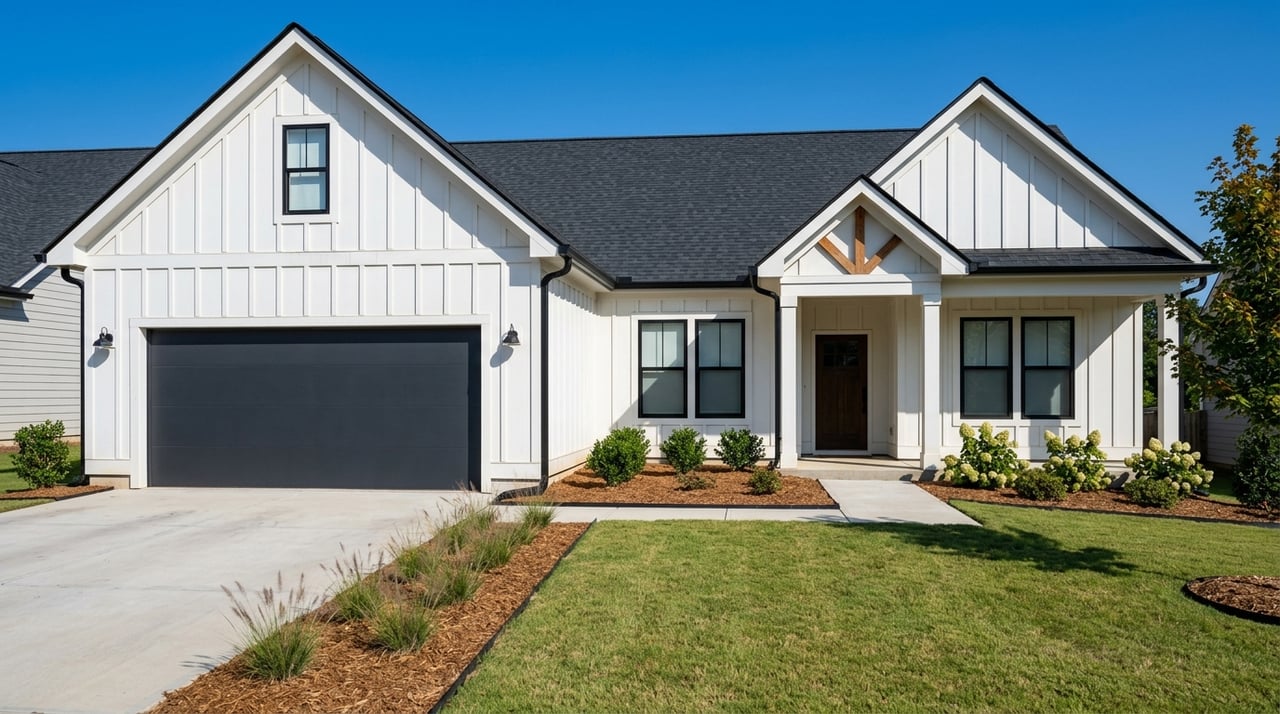
What Homeownership Costs Look Like in Placeholder Neighborhood
July 9, 2026
July 9, 2026
Buying a home is exciting, but the monthly payment can surprise you if you only look at the mortgage estimate. In a placeholder neighborhood setting, two homes with similar list prices can carry very different monthly costs once taxes, insurance, utilities, maintenance, and HOA dues are added in. If you want a clearer picture of what homeownership may really cost each month in North Carolina, this guide will help you break it down step by step. Let’s dive in.
When most buyers talk about a house payment, they often mean principal and interest. That is only part of the story. Your total monthly housing cost may also include property taxes, homeowners insurance, mortgage insurance, and in some cases supplemental insurance.
The Consumer Financial Protection Bureau notes that taxes and insurance are often collected through escrow. That means your monthly payment to the loan servicer may be higher than principal and interest alone. It also means your payment can change over time if taxes or insurance premiums rise.
Principal is the amount you borrowed, and interest is the cost of borrowing it. These are the most predictable parts of your payment if you have a fixed-rate mortgage. Still, they are only one piece of your monthly budget.
Property taxes in North Carolina are location-specific. The monthly amount can vary by county and municipality, so even homes in the same metro area may have different tax burdens.
This is one reason a home that looks affordable at first glance may feel different once you review the full payment. Before you make a decision, it helps to get the tax rate for the specific parcel you are considering.
In North Carolina, homeowners insurance is not required by state law, but your lender may require it if you are financing the home. The North Carolina Department of Insurance also notes that standard homeowners policies usually do not cover floods, earthquakes, mudslides, mudflows, or landslides.
For a broad benchmark, the National Association of Insurance Commissioners reported an average North Carolina premium of $1,526 for owner-occupied policies in 2022. That works out to about $127 per month, but it is only a baseline and not a quote for a specific property. North Carolina rate changes that took effect in 2025 and 2026 may also push current premiums higher.
If your down payment is under 20%, mortgage insurance is often part of your monthly cost. This can make a noticeable difference in affordability. A home that seems manageable based on interest rate alone may feel tighter once mortgage insurance is added.
Some of the biggest homeownership expenses do not always show up in the mortgage payment. These are the costs buyers sometimes overlook when comparing neighborhoods or home types.
HOA dues are usually paid directly to the homeowners association, not to your mortgage servicer. The CFPB says these dues can range from a few hundred dollars a month to more than $1,000 a month.
That makes HOA fees an important line item for condos, townhomes, and planned communities. If you are comparing properties, always ask whether there is an HOA and what the current fee schedule looks like.
Utilities can vary a lot based on the size of the home, the age of the systems, the local climate, and energy efficiency. For North Carolina, the U.S. Energy Information Administration reported an average residential electricity bill of $143.50 per month in 2024, based on average usage of 1,015 kWh.
That number is useful as a general benchmark, but your actual cost may be higher or lower. A larger home or one with older systems may cost more to run each month than a smaller or newer property.
Maintenance is one of the most important costs to plan for because it often arrives in uneven chunks. A water heater may last for years, then suddenly need replacement. Gutters, paint, HVAC service, roofing, and plumbing all add up over time.
Fannie Mae suggests budgeting 1% to 4% of the home’s value per year for maintenance. Newer homes may be closer to 1%, while older homes may be closer to 4%. In monthly terms, that is about $83 to $333 per month for every $100,000 of home value.
This is where many buyers get tripped up. Two homes may have similar sale prices but very different monthly ownership costs.
One home may have lower taxes but higher HOA dues. Another may have no HOA but higher utility bills or greater maintenance needs because of age and condition. A property in an area with higher insurance costs or added flood risk may also require a bigger monthly budget.
A helpful way to think about homeownership is to separate fixed or semi-fixed costs from variable property-driven costs.
Fixed or semi-fixed costs often include:
Variable costs often include:
This framework makes it easier to compare homes realistically instead of focusing on list price alone.
Because the neighborhood name provided here is a placeholder, the best approach is to use North Carolina-based budgeting context. That keeps your planning grounded in real state-level factors while you narrow your search.
The North Carolina Department of Insurance says standard homeowners insurance usually does not cover floods. If a property has flood risk, you may need separate coverage, which can affect your monthly budget.
This is especially important to confirm early in the process. Supplemental insurance costs can materially change affordability, even when the home price seems to fit your target range.
North Carolina property tax rates are published at the county and municipal level. That means the only reliable way to estimate this cost is to check the exact parcel and its local rate structure.
If you are comparing homes across different parts of the Triangle, this can be a major reason monthly costs vary. It is one of the smartest numbers to verify before you make an offer.
If you are trying to decide what you can comfortably afford each month, start with a full-picture budget rather than a mortgage calculator alone.
Before choosing a home, ask for:
These details are often the difference between a home that looks affordable online and one that truly fits your monthly comfort zone.
If you are exploring homes in a placeholder neighborhood or comparing communities across the Triangle, the main takeaway is simple. Do not judge affordability by list price or principal-and-interest estimates alone.
Instead, look at the full monthly cost of ownership. That gives you a more realistic view of what day-to-day homeownership may feel like after closing.
A careful budget can also help you compare property types with more confidence. For example, a townhome with HOA dues may still be a better fit than a single-family home with higher maintenance and utility costs, depending on your priorities.
At DDR Realty, the goal is to give you practical guidance that feels clear and personal, not overwhelming. When you are weighing homes in the Triangle, it helps to have someone who can slow the process down, help you compare the numbers, and keep the focus on what works for your real life.
Whether you are buying your first home, planning a move, or sorting through a life-stage transition, a full monthly budget can help you make a steadier decision. If you want help refining your search and comparing the true monthly cost of ownership, call or schedule a free consultation with Eric Rainey.

DDR Realty are dedicated to helping you find your dream home and assisting with any selling needs you may have. Contact us today to start your home searching journey!